In the global wave of cross-border e-commerce, mobile applications (Apps), mobile games, short plays, voice chat and other pan-entertainment competitions, traffic is the lifeline. As the two giants of global digital marketing, the structure and risk control logic of the advertising account systems of Facebook (Meta) and TikTok (TikTok For Business) are the "underlying water, electricity and coal" that determine the life and death of all overseas projects.
Many companies or senior pitchers who are new to the overseas market tend to devote all their energy to editing advertising materials and optimizing the target audience, but they often get stuck at the most basic and fatal level - limiting the budget due to choosing the wrong account type, having funds deducted due to non-compliance in the category, or encountering risk control due to improper operation, resulting in the consecutive closure of the homepage and account. Behind the so-called "individual account", "domestic agent account", "overseas account", "three no restrictions", "white list" and other jargon in the industry are intertwined with complex agency interests, risk control algorithms and geopolitical policies.
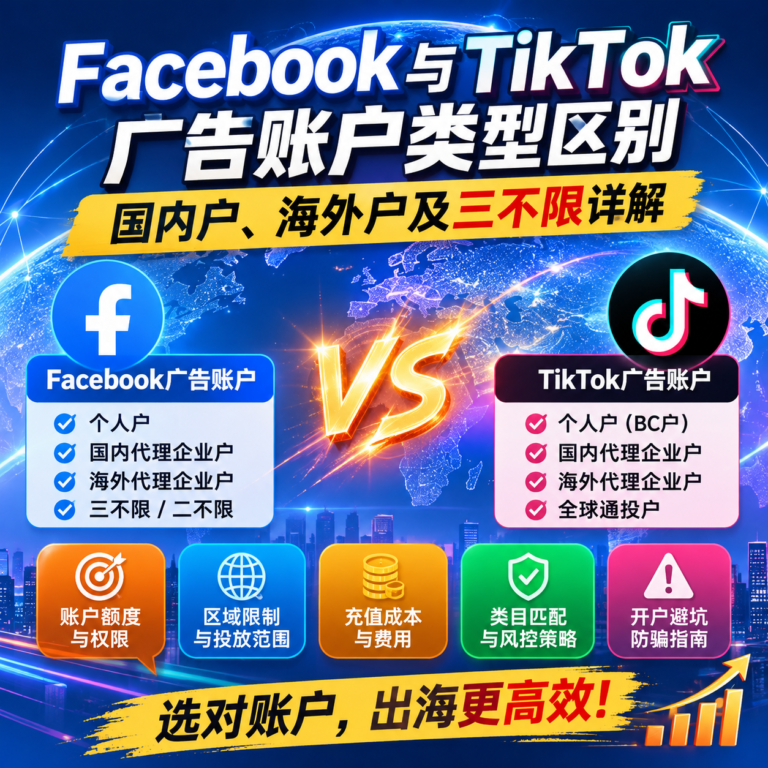
This article will use absolute depth and breadth, using more than 5,000 words, to comprehensively start the relationship between Facebook and TikTok Ads AccountThe entire ecosystem provides accurate user selection models for each vertical category, underlying risk control strategies, and industry fraud and pitfall prevention guides.
Part One: In-depth deconstruction of Facebook (Meta) advertising account ecosystem
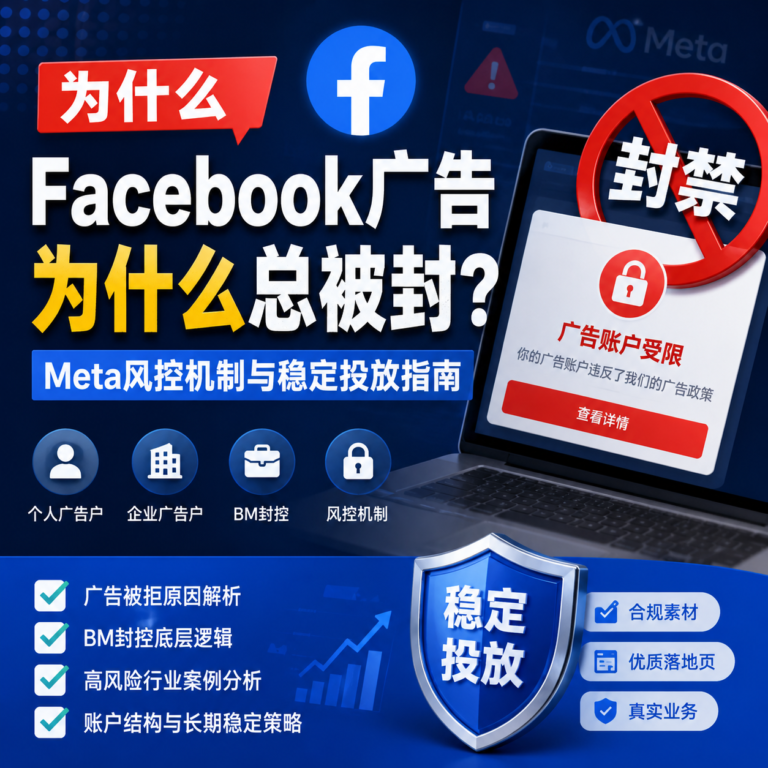
Facebook’s advertising risk control system (commonly known as the “black room” in the industry) is known for its complex machine learning algorithms and strict joint banning mechanism. To fully understand Facebook advertisers, you must first understand its core concepts.
1. Personal Ad Accounts
Personal advertising accounts are the most native underlying account form in the Meta ecosystem. For every registered Facebook personal account (User Profile), the system will come with a unique personal advertising account by default.
Core operating mechanisms and types
In the gray industrial chain of the overseas industry, the personal accounts used for advertising are finely classified:
Novice account/new account: a personal account that has just been registered, has no weight, and has not undergone real-name authentication.
Old/durable accounts: Accounts that have been registered for a long time (usually more than 1 year) and have traces of normal social behavior, interaction with friends, and login history.
White account (old account with bill limit): refers to a personal account that has run ads, bound cards, and accumulated a certain credit limit in the Meta system.
Second trial account/unblocked account: a high-profile personal account that was once banned due to risk control, but successfully appealed by submitting overseas ID card, driver's license and other information.
Debit and recharge mode
Individual households mainly use the postpay (Postpay) or prepay (Prepay) bill deduction model. Pitchers usually settle by binding an overseas Virtual Credit Card (VCC) or PayPal.
Depth advantages, disadvantages and underlying risks
Advantages: Extremely flexible, zero threshold. There is no need to submit a business license or go through manual review by domestic agents. For pitchers doing sensitivity testing, early low-budget dips, it can be done right out of the box.
Fatal flaw and underlying risk control logic: The weight of individual accounts is at the bottom of the Meta system. Meta's anti-fraud algorithm monitors individual accounts' IP stability, card number (Bin number) fraud rate, and material duplication around the clock. Once it is detected that the login IP jumps frequently (such as using an unstable VPN node), the bound virtual card is a high-risk card, or the advertising material is misleading, the account will be triggered to be "blocked in seconds".
Limit ceiling: Daily Spend Limit (DSL) for new self-employed individuals is usually extremely low, often limited to $25, $50, or $250. When faced with the urgent need for pressure testing or mass production of explosive products, individual households simply cannot afford the consumption of large budgets.
2. Domestic Agency Accounts
Domestic agentFacebook business accountIt is the core choice for regular overseas companies, brands and B2B foreign trade manufacturers in mainland China. Since Meta does not have a direct sales team in mainland China, all corporate account opening, recharge and first-line policy review are handled through its officially authorized first-level agents in mainland China (such as Feishu Shennuo, BlueFocus, Cheetah Mobile, Titanium Technology, Hugo Cross-border, etc.).
Account opening process:
[China Overseas Advertiser] ──(Submit license/OE system)──> [Domestic first-level agent] ──(Audit/Account opening)──> [Meta official backend]Core operating mechanism and OE system
Advertisers must submit a true and valid mainland China business license, legal person information, company official website (including complete privacy policy, return and exchange terms) and the Facebook Business Management Platform (BM) ID to be placed in the OE (Onboarding Expression) system provided by the agency. The account will be released only after passing the agent's preliminary review and Meta's final review.
Strict "three bindings" policy
In order to prevent fraud and false advertising, domestic agents have implemented the industry's famous "three bindings" risk control restrictions:
Account opening entity (business license)
Designated Facebook fan page (Page)
Designated promotion domain name/link to landing page (Website/Domain)
These three will be forcibly anchored by the system when registering. This means that if an advertiser uses an account opened with license A to run an independent website with domain name B, or temporarily changes a fan page that has not been reported in OE, the advertisement will not pass the review, and may even directly lead to the account being permanently banned by the system due to "subject non-compliance".
Quota and stepped quota increase mechanism
Ordinary new households in China have a strict daily consumption limit (usually initially $450/day or $150/day). In order to exceed this limit, advertisers must maintain continuous advertising consumption in the first few cycles after opening an account, and must not engage in any behavior that results in rejection, violation, or decrease in homepage rating. The system will automatically unblock the account to $5,000 within 3-7 days based on the account's "compliant consumption performance" until the limit is completely lifted.
In-depth analysis of advantages and disadvantages
Advantages: Funds are safe. The top-up money is directly transferred to domestic agents, and RMB corporate transfers are supported and formal VAT invoices are issued. The most important thing is that if the account is unfortunately officially closed due to mistaken closure or non-subjective fraud, the recharge balance inside can be transferred to a new account under the subject by the agent in the background with one click, without any loss of funds.
Disadvantages: Very low degree of freedom. "Three bindings" seriously limits the flexibility of multi-category and multi-website testing; category review is extremely strict, and any marginal, adult, imitation, and online earning products will be directly rejected during the account opening stage; during holidays or sudden risk control surges, the approval cycle for account opening and domain name change often takes 2-3 working days, seriously delaying the battle.
3. Overseas Agency Accounts
Overseas agency corporate accounts refer to corporate advertising accounts opened through Meta authorized agents overseas (such as the United States, Hong Kong, China, Taiwan, South Korea, Vietnam, Dubai, etc.) and using the qualifications of overseas local company entities.
core operating mechanism
Overseas agents have different agency business management platform (Agency BM) channels within Meta. Its account opening process does not go through the OE system in mainland China, but directly reports to Meta headquarters through the internal whitelist of overseas agents.
Core advantages and high-weight underlying logic
Overseas pitchers are regarded as a weapon for "dimensionality reduction strikes" among experienced overseas pitchers. Their core advantages come from Meta's trust algorithm model for different geographical regions:
No restrictions on "three bindings": Overseas users are born without restrictions on homepages and domain names. An overseas corporate advertiser can run 10 different independent websites at the same time and mount 20 different fan homepages, which greatly liberates the productivity of multi-project operations.
There is no limit when you start: when you sign up, you will have no limit at all (No Limit) or you will be directly given a super limit of tens of thousands to hundreds of thousands of dollars in a single day, which can instantly increase your budget when there is a huge order.
Advertising review "green channel": Overseas accounts are in Meta's machine review stage. Since they belong to Agency BM with high overseas credit ratings, the probability of materials triggering manual review is significantly reduced, and ads are reviewed very quickly (usually within 15-30 minutes).
Deep shortcomings and financial costs
Account opening threshold and minimum deposit: Generally, scattered top-ups of tens of dollars are not accepted, and the minimum deposit threshold generally ranges from $500 – $2,000.
Recharge service fee/handling fee: This is the main cost for overseas households. Domestic agent account opening and recharging are basically free, while overseas agents will charge an additional 3% – 10% service fee based on your category and consumption.
Funding risk: Funds need to be paid to overseas agents through overseas wire transfers, cryptocurrency (USDT), or overseas third-party payment tools (such as Payoneer, Stripe). Once an agent runs away or a cooperation dispute occurs, the cost of cross-border rights protection is extremely high.
4. Special high-power households in the industry (three unrestricted / two unrestricted / whitelist)
In the long-term confrontation between black and white industries and the extreme pull of advertisers, several special accounts with special permissions have emerged in the market, and they are collectively referred to as "special accounts."
| Special household type | Permission feature description |
|---|---|
| Three unlimited advertisers | No limit on daily consumption (No Limit); no limit on fan homepages bound to advertisements (can be changed at will); no limit on promotion landing page domain names (one user can support multiple sites and can change sites at will) |
| 2. No restrictions on advertisers | Usually: no quota, no domain name limit, but restriction/strong binding to homepage; or: no quota, no restriction to homepage, but restriction/strong binding to domain name |
| Whitelist accounts (dead Taobao accounts/specially approved accounts) | Meta is a top-level account open to a very small number of the world's top brands, major game manufacturers, or specially approved strategic partners. It enjoys extremely high immunity from violations and is extremely resistant to blockades, and is even allowed to run some sensitive and borderline materials. |
The underlying essence of "three unlimiteds" and "two unlimiteds"
Most of the so-called "three unlimited" accounts circulating in the market are essentially high-weight overseas local corporate accounts, or domestic agents apply to Meta for unlimited whitelist accounts in special industries (such as large furniture, high-consumption games) during a specific period. Since the whitelist permissions of these accounts have not been withdrawn, they are packaged as "three unrestricted" by intermediaries and resold at high prices in the market or take commissions based on points.
Part 2: In-depth deconstruction of TikTok (TT For Business) advertising account ecosystem
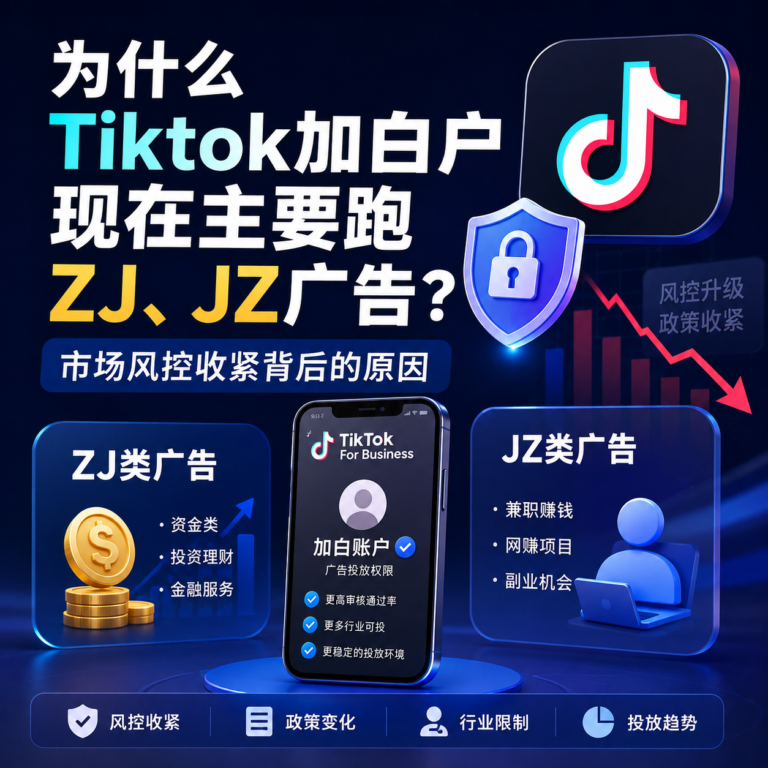
As an emerging global traffic incremental pool, TikTok’s advertising account system draws heavily on Facebook’s mature architecture. However, because it is in a rapid iteration period, its regional risk control (Novice Village mechanism) and material review mechanism have shown completely different evolution trajectories.
1. Personal advertising account (self-service account/BC account)
A personal self-service account is an account that anyone can register and open on their own by entering an email or mobile phone number on the TikTok For Business official website (tiktok.com).
Core operating mechanism and extremely low system weight
This type of account is usually called "BC account" (Business Center). When registering, users can select a personal identity or enter a false company name. Recharge relies on personal credit card or PayPal, which is a typical prepaid or real-time debit account.
Fatal flaws and risk control strategies
TikTok adopts a default risk control strategy of extreme distrust for individual self-service accounts.
Since a large number of non-compliant sellers use individual accounts to sell unlisted low-end hot products, TikTok’s review robots have a very high rate of killing materials from individual accounts. Often a clothing video that works well in corporate accounts will be directly rejected by individual accounts due to reasons such as "over-exposure" and "misleading exaggeration", or even lead to direct account closure, and manual appeals are not supported at all.
Targeting permissions castration: In some countries, individual accounts cannot turn on certain advanced audience targeting (such as advanced custom audiences, specific geographical location fine-tuning), and may not be able to access the Pangle Pangolin Alliance advertising space owned by TikTok.
2. Domestic agency business households (including regional restrictions and “Newbie Village” mechanism)
Domestic agency companies are the absolute main force for Chinese merchants to launch TikTok. Similar to Facebook, advertisers need to submit a mainland business license and landing page through a domestic first-level agent authorized by TikTok to open an account.
Core risk control mechanism: dead card "Novice Village" (regional restrictions)
This is the most obvious feature of TikTok’s domestic agents and the most troublesome feature for pitchers. In order to prevent Chinese cross-border e-commerce sellers from sweeping the world with their extensive hot-selling model and causing local ecological collapse, TikTok has established a strict regional isolation policy:
When submitting an account opening application, advertisers must clearly check the target areas in which the account will be advertised (such as European and American households, Southeast Asian households, Middle Eastern households, Japanese and Korean households, and Latin American households).
Once you log in, the "Country Selection" list in the account background will be locked. For example, when creating a new ad group for a "Southeast Asian household", you will never be able to check the United States or the United Kingdom. If the project needs to open up new markets, the only way is to re-submit the main information to the agent and open a new sub-account corresponding to the country.
Initial limit and increase model
Newly opened domestic TK business accounts usually have a daily consumption limit of $500 or $1,000. If you want to increase the amount, not only does the account need to maintain continuous consumption, but also the account's ad rejection rate needs to be kept within a very low percentage (usually the rejection rate is required to be less than 10%). Once the rejection rate exceeds the standard, the account will not only be unable to increase the limit, but will also trigger a risk control reduction to $200 or even directly ban the subject.
Depth pros and cons
Advantages: Good compliance and high rebates. When an advertiser's consumption reaches a certain level (for example, consumption exceeds $10,000 in a single month), domestic agencies usually rebate the advertising fees officially provided by TikTok to the advertiser. The rebate ratio usually ranges from 3% – 10% (that is, after recharging $10,000, the account actually receives $10,300 – $11,000), which is a huge net profit in the cross-border e-commerce industry with low profits.
Disadvantages: Globally Combined Bidding cannot be carried out due to regional lock-in, multi-country product testing is extremely troublesome, and budgets cannot be flexibly allocated between different regions.
3. Overseas agency business accounts (overseas local Global Investment accounts)
Overseas agency business accounts refer to corporate advertising accounts opened through TikTok’s local agencies overseas (such as the United States, the United Kingdom, Singapore, Vietnam, Hong Kong, etc.).
Core Features: Global Investment (No Region Limit)
This is the trump card for the long-term prosperity of overseas TK households. After overseas local accounts are opened, all countries and regions where TikTok has opened advertising will be unlocked by default. With one advertising account and one campaign, you can check the United States, United Kingdom, Saudi Arabia, Indonesia and Thailand at the same time. The system will automatically allocate budgets among multiple countries based on global real-time bidding (eCPM).
Weight and review mechanism
Overseas local users have a very high system green light rate:
No limit: There is no daily consumption limit when you sign up. It is suitable for super hot products or short drama projects that require spending tens of thousands of dollars in one day to seize the traffic high ground.
High degree of material tolerance: TikTok’s material review for overseas local companies, due to differences in geo-culture and legal structure, its machine preliminary review standards are obviously looser than those for accounts opened by mainland Chinese entities. Many live-action short drama materials or online earning app game screen recordings that would be judged as "vulgar, conflicting, and false propaganda" by domestic users often pass the review smoothly and generate extremely high consumption among overseas users.
Cost and charging threshold
The requirements for opening an account are high, and the minimum deposit usually starts at $1,000.
Since they do not enjoy the policy bonus of domestic agents, overseas customers usually do not receive any rebates. On the contrary, agents will charge a recharge fee of 3% – 8%. This means that the cost of acquiring customer traffic using overseas accounts is naturally nearly 10 points higher than that of domestic agents. We must rely on projects with extremely high conversion rates to offset this financial disadvantage.
Part 3: First disclosure in the industry: Accurate matching model of vertical overseas categories and advertising accounts
Choosing an account type is not about the more expensive the better, nor does it mean the higher the authority, the better. Instead, it should be accurately calculated based on the project's business model, product profit margins, the degree of loss of the homepage domain name, and the compliance boundaries of the materials. The following is a practical model of user selection for the four core overseas markets:
Model 1: Vertical boutiques and DTC brands going global (clothing, home furnishings, DTC 3C, branded beauty)
Track characteristics
The main brand operation pays attention to brand tone and long-term repurchase; the domain name (Domain) and the official fan page (Page) are the core intangible assets of the enterprise, and they are absolutely not allowed to be easily replaced or blocked; the materials are all real shots, 3D modeling or refined pictures of high customer unit prices, with a very high degree of compliance.
Account gold portfolio
[Facebook] Domestic agency business households (main force) + [TikTok] Domestic agency business households (regional specialized households)
Deep matching logic
DTC brands do not need to frequently change homepages and domain names, so Facebook’s “three bindings” for domestic users are not only not a restriction, but a security mechanism for the official to protect the main assets.
Pursue financial cost minimization. There are zero account opening fees and zero recharge fees for domestic accounts, which can maximize every cent of the advertising budget. At the same time, by deeply cultivating a single country on TikTok (for example, only investing in the US site), you can fully enjoy the stable 5% – 8% advertising rebates provided by domestic agencies and establish a price advantage in front-end bidding.
Compliance refund guarantee: Brand websites often face inventory adjustments or strategic shifts. Once the project is suspended, the remaining tens of thousands of US dollars in the budget of ordinary domestic households can be 100% safely refunded or transferred, but it is difficult for overseas households to do this.
Model 2: Grocery store and hot-selling e-commerce (new and exotic toys, low-price holiday gifts, independent station product testing)
Track characteristics
The life cycle is extremely short (a product may only be popular for 2 weeks); 20-50 completely different SKUs need to be tested intensively every day; because most of the products have low customer unit prices, long logistics cycles, and extremely high consumer complaint rates, the Page Score of fan pages can easily fall below 2 points, which triggers the Meta system to block homepages and domain names.
Account gold portfolio
[Facebook] Overseas three unlimited advertising users / two unlimited household matrix + [TikTok] Overseas global investment users
Deep matching logic
Combat high loss of homepage/domain name: The normal trend of hot-selling products is “today’s sales will be huge, but tomorrow’s site will be blocked”. If you use domestic restricted accounts, once the domain name dies, the entire advertising account will be completely scrapped, and it will take 3 days to go through the OE review to open an account again, and the bonus period for popular products has long passed. Facebook's three-user limit allows you to discard blocked homepages and domain names at any time, and seamlessly bind new sites and new homepages to one account to ensure uninterrupted advertising delivery.
Multi-country simultaneous testing of products: TikTok’s explosive product flow is extremely dependent on “Global Token”. A strange new toy that pitchers can't predict whether it will explode in the UK or Saudi Arabia. Using overseas Global Pass accounts, you can directly select 30 major consumer countries in the world in the last advertising campaign, and use TT's algorithm to automatically find conversion highlands for traffic. The efficiency is several times higher than opening a bunch of regional sub-accounts in China.
Model 3: Pan-entertainment/social networking/interactive apps/short plays overseas (short plays, chat, dating, online earning applications, SLG games)
Track characteristics
The amount of consumption is extremely terrifying, and a short skit or game can cost 50,000 to 200,000 US dollars in a single day; the budget needs to be raised quickly within half an hour; the material often contains high conflicts, strong reversals, and even sideline emotional conflicts or inducements to get rich, which is the hardest hit area for high-frequency triggering system risk control and rejection of review.
Account gold portfolio
[Subject running volume] Overseas high-weight enterprise household matrix + [Long tail defense] Domestic large customer qualification rebate household
Deep matching logic
Breaking through the limit card point: The limit of a few hundred dollars per day for a regular new user is simply a drop in the bucket for the minimum amount of short dramas or games. Overseas companies can unlock No Limit immediately after registering, and can spend hundreds of thousands of dollars overnight, instantly reaching the first-round audience in the target country, and helping the app quickly reach the top of the App Store/Google Play category list.
Use high-weighted channels to tolerate material compliance violations: For the sake of conversion rate, the edited materials of short dramas often contain extremely bloody and violent conflicts. Because overseas agency accounts have higher risk control tolerance thresholds in the Meta and TikTok systems, they can significantly reduce the probability of "rejection of material review leading to joint account closure".
Financial actuarial calculation: Under a large budget, even if overseas customers charge a 3% handling fee, as long as the budget is not stuck and the materials can be run for three more days, the ROI (return on investment) increase will far exceed the handling fee cost.
Model 4: Specially sensitive goods/Black Five Categories/Counterfeit brands (weight loss and hair growth, high imitation luxury goods, electronic cigarettes, adult products)
Track characteristics
These categories clearly violate Meta and TikTok’s Advertising Policies. It is an absolutely illegal product that the official risk control department pursues and intercepts around the world through AI image recognition, text semantic analysis, and manual inspection. The average life of an account is often measured in "hours" or even "minutes."
Account gold portfolio
Specific overseas underground channel households + personal bill number/durable number high-frequency matrix + Cloak anti-detection system
Deep matching logic
Domestic entities are absolutely prohibited from opening accounts: Any attempt to use a mainland China business license to apply for a domestic agent account to violate the five categories will result in the license entity being permanently blacklisted by the official, and the agent will directly confiscate all recharge deposits.
Implement the "consumables" bombing strategy: The underlying logic of this type of gameplay is to treat advertisers as pure consumables. The pitcher unblocks accounts by purchasing low-cost overseas specific business accounts in bulk from underground channels or individuals who have already made accounts to maintain accounts, and cooperates with Cloak technology (displaying regular B2B web pages to review robots, and displaying sensitive product landing pages to real overseas users). Using multi-computer, multi-IP (such as anti-correlation browser + residential static proxy) matrix bombing delivery, be prepared to die at any time, change accounts at any time, and quickly harvest the interest rate difference.
Part 4: Low-level risk control confrontation: Account banning logic and anti-correlation strategies of Facebook and TikTok
To survive in global digital marketing, you must understand the underlying logic of the two major platform risk control robots. The platform's anti-crawler and risk control engines not only look at the information you submit, but also look at every digital footprint you leave in cyberspace.
1. Hardware and environment correlation logic (browser fingerprint)
Meta and TikTok's front-end security scripts (such as Canvas rendering scripts, WebRTC leak detection) will collect your computer's hardware fingerprint the moment you log in to the ad backend.
[Ordinary browser login] ──> Obtain real MAC address / Graphics card network card fingerprint / Real IP ──> Trigger association ──> [Block across the board]

[Anti-associated system login] ──> Virtual independent environment (isolate Canvas/WebRTC/Cookie) ──> Simulate overseas clean environment ──> [Account security]
If your computer has ever had a Facebook personal account or a domestic corporate account, when you directly log in to the purchased "Three Unlimited" overseas account on this computer, the system detects that the graphics card WebGL fingerprint, screen resolution, font list, and MAC address are 100% overlapping, and the risk control engine will determine it as "the same malicious operator", and the newly opened overseas account will be banned within 5 minutes.
Confrontation strategy
It is strictly prohibited to directly use Chrome or Edge browser to open multiple browsers and put them in the background. A professional cross-border anti-correlation browser (such as AdsPower, Hubstudio, Linken Sphere, etc.) must be used. Configure an independent virtual browser environment for each advertising account, completely isolating Canvas, Audio, WebRTC and Cookies.
2. IP purity is related to network environment
The VPNs used by many pitchers (such as various airport nodes) belong to the computer room IP (Datacenter IP). The characteristic of this type of IP is that hundreds or thousands of unrelated netizens share the same IP exit at the same time. If a user on this IP is banned from FB due to violations, then the IP will be included in the high-risk blacklist by Meta's anti-fraud database (such as MaxMind, Spamhaus).
Confrontation strategy
When targeting high-weight users or overseas users, you must use overseas residential static proxy IPs (Residential IPs, such as fixed and clean native IPs from big-name agencies). Ensure that an advertising account corresponds to a fixed overseas local residential IP to simulate the most realistic overseas local business user behavior.
3. Card number (Bin number) and payment method risk control
The risk control systems of Meta and TikTok have a "co-ordinated mechanism" for payment methods. The first six digits of a credit card are called the card number (Bin number), which represents the issuing bank and card type. Due to poor management of many low-end virtual card platforms on the market, a large number of unscrupulous companies use their card headers to refuse payment and squander advertising fees (they abandon the card directly after reaching the bill limit). As a result, the trust of these stuck users in the Meta system dropped directly to zero.
Confrontation strategy
Apply to a reliable overseas overseas agent or large payment institution for a high-trust virtual card endorsed by a physical bank. Once an account is blocked due to product violations, the card must be destroyed immediately in the virtual card background. You must not try to bind the same card to a second healthy advertising account, otherwise it will instantly detonate payment risk control.
Part Five: The ultimate guide to preventing fraud and cutting when opening an overseas account
Since the information of overseas accounts, "three unlimited" and other special accounts is extremely asymmetric and does not fall under the jurisdiction of conventional domestic laws, the account opening market is filled with a large number of scammers, intermediaries and "leek-cutting" routines.
⚠️ Three major scams at the core of the market exposed:
Use the domestic high-limit account of $5,000 to pretend to be "overseas unlimited, three unlimited", and charge a 10% IQ tax service fee.
Low-fee phishing, inducing large-amount pre-recharges (for example, if you deposit $5,000, there is no handling fee), Telegram will directly block you after receiving the payment.
"Malicious clearing" in the background: When an advertiser has a large number of orders and there is a huge profit and balance in the account, the bad intermediary unbinds BM and swallows the money in the background.
In order to ensure the safety of funds and project assets, you must strictly abide by the following iron rules when looking for unofficial channels to open an account:
1. Verify the underlying ownership of the account (check the BM structure)
After getting the so-called three unlimited overseas accounts, immediately go to Facebook Business Management Platform Settings -> Advertising Account to view its owner (Owned by). If the owner is a business entity with obvious Chinese pinyin, or requires you to use the domestic OE replacement system, then it is a pseudo-three-unlimited one. It is essentially a domestic ordinary restricted household. Do not pay a high premium.
2. Small-amount batch recharge test (control fund exposure)
When working with a new agent, no matter how attractive the other party’s low service fee terms are, the initial deposit should never exceed $500. Maintain a small-amount, high-frequency recharge rhythm for 2-3 weeks to ensure smooth recharge channels, stable account placement, and smooth refund processes, and then gradually increase the size of a single recharge.
3. Firm ownership of core assets (physical isolation of pixels and homepage)
No matter what type of advertising account you use, remember: Never build pixels and core assets directly in other people’s advertising accounts!
Correct operation: Register a safe and absolutely compliant domestic entity BM as an asset base. Create your core pixel (Pixel), Custom Audience (Custom Audience) and homepage here.
Authorization mechanism: Through Base Camp BM, authorize pixels in the form of "Partner" or "Shared Assets" to the "three unlimited" or "overseas households" given to you by the agent to run ads. In this way, even if an overseas advertiser suddenly dies due to material violations, your core customer conversion data (pixels) are still safely in your own base camp, and can be authorized to the next new account at any time to continue running, and the data assets will never be lost.
Summary: The ultimate overseas account opening strategy under the wave of globalization
Today, as bidding for overseas traffic becomes increasingly fierce, advertising accounts are no longer a simple “payment tool” but a corporate strategic asset that requires refined allocation.
There is no "one-size-fits-all" advertiser. Regular brands going overseas must make full use of the zero cost and financial security of domestic agents, and cooperate with long-term content accumulation to fully reap the platform dividends; while cross-border explosive products, applications and short drama teams that pursue explosive power and agile product testing must establish a high-dimensional investment matrix based on "overseas global investment accounts/three unlimited accounts + anti-correlation system + physical isolation of pixel assets".
A thorough understanding of the underlying logic of the accounts of the two major platforms and an actuarial balance between risk control compliance and business efficiency are the real moats for cross-border overseas companies to be able to weather the storm and make crazy profits in the global market.
Frequently Asked Questions (FAQ)
1. What types of Facebook ad accounts are there? What is the difference between domestic households and overseas households?
Facebook advertising accounts are mainly divided into personal advertising accounts, domestic agency corporate accounts and overseas agency corporate accounts. In addition, there are three unlimited, two unlimited and whitelist and other special permission accounts on the market.
Individual accounts are usually suitable for small-budget testing and personal advertising; domestic agency accounts are suitable for companies with formal business licenses, focusing on capital security and long-term brand management; overseas agency accounts are more suitable for projects that require multiple homepages, multi-domain management, and high advertising consumption quotas. Different accounts have differences in account opening requirements, advertising quotas, recharge costs and account management permissions.
2. Can Facebook’s domestic advertisers place their ads in overseas markets?
Yes. Facebook's domestic agency business does not mean that it can only be placed in the Chinese market. Advertising accounts opened by mainland Chinese companies through formal agency channels can be placed in overseas target markets based on account permissions and account opening review requirements.
However, domestic agency accounts usually have binding restrictions on the account opening entity, Facebook homepage and promotional domain name. Advertisers need to clearly declare their advertising business and related websites when opening an account. Subsequent changes to homepages or promotional domain names may require re-examination or application.
3. Which one is better, Facebook’s overseas advertisers or domestic agencies?
There is no absolute advantage or disadvantage between the two, it mainly depends on the project type and delivery requirements.
The advantages of domestic agency accounts are that the account opening process is relatively standardized, supports RMB corporate recharge, and fund management is relatively convenient. Some agency channels also provide advertising rebates, which is suitable for long-term brands and formal cross-border e-commerce businesses.
Overseas agents usually have more flexible homepage and domain name management rights, and some accounts have higher advertising consumption quotas, which are more suitable for multi-project operations and large-budget investment. However, the deposit threshold, recharge fees, and the agent's fund security issues need to be considered.
4. What do Facebook’s three unrestricted advertisers mean? Is there really no limit, no restriction on home page and domain name?
Facebook's "Three Unlimited" is usually the industry's name for special advertising account permissions, which mainly refers to fan pages with no limit on daily ad consumption, no limit on ad binding, and no limit on promotion landing page domain names.
However, it should be noted that the three no restrictions do not mean that the account is not subject to Meta advertising policies, nor does it mean that all advertising accounts have the same permissions. Some of the so-called three-unlimited accounts on the market are actually just ordinary high-limit accounts. Advertisers should verify the true ownership, authority and management structure of the account before opening an account.
5. What is the difference between TikTok’s domestic agents and overseas agents?
Domestic TikTok agent companies usually need to submit business licenses, landing pages and other information through domestic authorized agents. When opening an account, they need to select a target delivery area. Some accounts will be subject to regional restrictions after they are issued.
TikTok's overseas agency business accounts are opened through overseas local agency channels, and some accounts support launch in multiple countries and regions, providing more flexible market choices.
There are also differences between the two in terms of advertising rebates, recharge fees, account opening thresholds and delivery areas. Domestic users are usually more suitable for projects that deeply explore a single market, while overseas users are more suitable for advertisers with multi-country testing and global placement needs.
6. Can TikTok advertising accounts be placed in the US, UK and Southeast Asia markets at the same time?
This depends on the regional permissions of the ad account.
Some domestic agency business accounts have already determined the target delivery area when opening an account, such as accounts in Europe and the United States, accounts in Southeast Asia, accounts in the Middle East, etc. They may not be able to freely switch to other areas after opening an account.
Some overseas agency companies support multiple open advertising markets around the world, and can choose target markets such as the United States, the United Kingdom, Saudi Arabia, Indonesia, and Thailand in the same advertising account. However, the specific countries that can be launched still need to be based on the areas that are actually open in the account backend.
7. How to choose between Facebook and TikTok advertising accounts? What issues need attention?
When choosing a Facebook or TikTok advertising account, you must first consider the industry to which the project belongs, the target country, daily advertising budget, homepage and domain name management needs, and the compliance requirements of the account.
If it is a formal cross-border e-commerce or DTC brand, domestic agent companies can usually be given priority; if multi-country testing, multi-website management or higher advertising consumption quotas are required, overseas agent companies can be evaluated based on actual authority.
Before opening an account, you need to verify the agent qualifications, actual account ownership, advertising quota, recharge fees, refund rules and asset management authority. Especially when it comes to core assets such as BM, homepage and Pixel, the company itself should try to take ownership of them to avoid data and business losses caused by agent changes or account abnormalities.